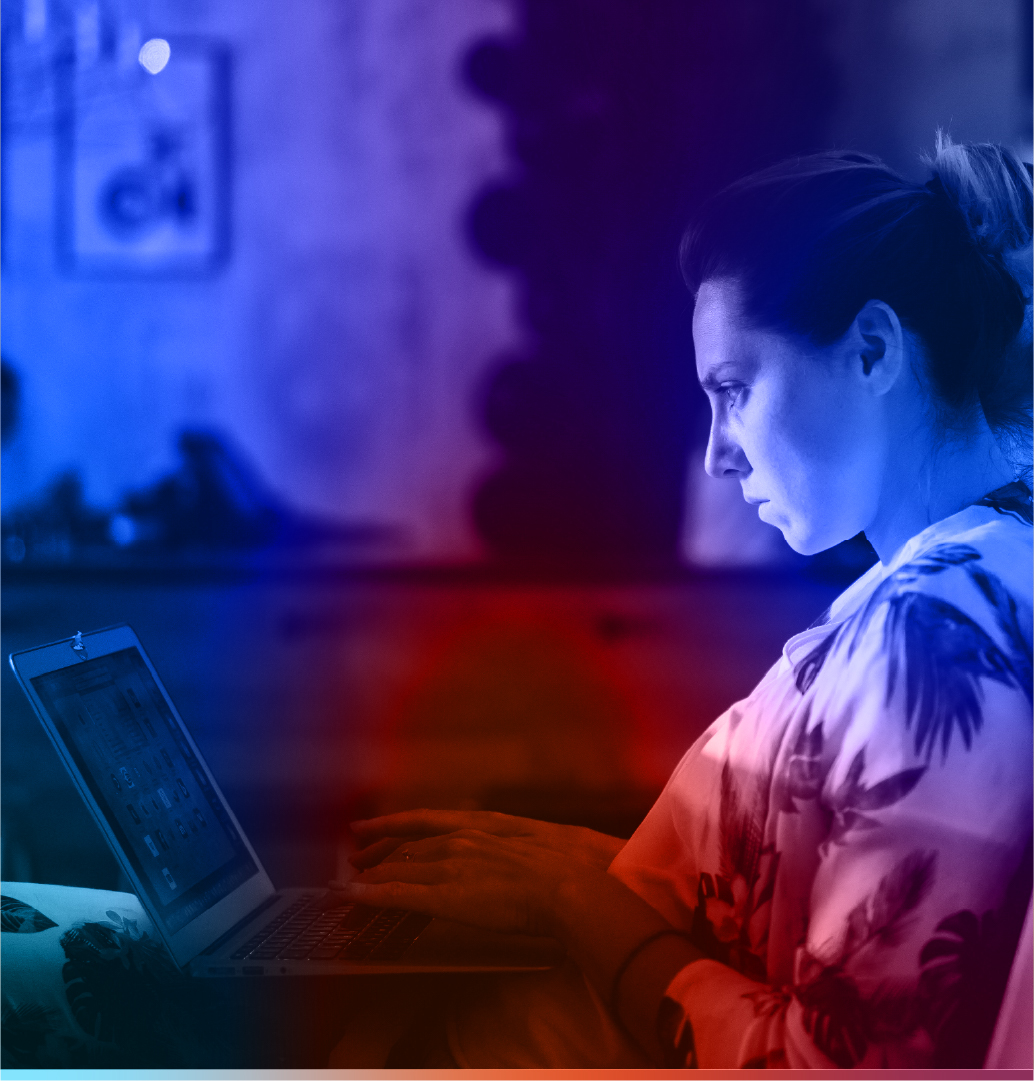
There's a factor that quietly accompanies our days at the screen: posture. We're not always aware of it, but as the hours pass it starts to have very concrete effects. Our breathing gets shorter, fatigue sets in faster, concentration drops without our noticing, and decisions start to feel heavier.
It's not simply about comfort. The way we sit, breathe, and hold the body has a direct effect on our mental clarity and on the quality of what we produce. If the designer is the tool, posture is part of its calibration: the body isn't just a support, it's part of the process.
It's an invisible enemy because it's there every day, but we rarely register it, even when we swear we're "sitting properly." Without noticing, we go from working upright to spending most of the day hunched over a screen. And much of that day happens right there: video calls, long presentations, document reviews, important decisions made while looking at slides or dashboards. If we're honest, more than once we notice how we're sitting… too late.
The body isn't just a support: it's part of the process.
The good news is that we don't have to completely transform the way we work to improve it. A few adjustments, kept up over time, are enough:
- Set the screen at eye level.
- Keep the back supported and the feet firmly on the floor.
- Relax the shoulders.
- Take short breaks every 60 to 90 minutes.
They're simple gestures, but sustained they help hold focus, energy, and clarity through long days. And our back will probably be grateful too.
When we're aware of these things, we can think through our ways of working better: clearer meetings, more organized presentations, more human processes. In the digital age the body doesn't disappear. Taking care of how the instrument sits and breathes is also taking care of the quality of what comes out of it. And if we can design the way we work better, we can also work better together.